

Redefining Ergonomics in Footwear: From Arch Support to Functional Shoe Manufacturing
Jun 17, 2026
The foot is not merely a weight-bearing structure; it serves as the primary stabilizing platform of the human kinetic chain. Every stance, step, run, and turn transmits body weight through the heel, midfoot, and forefoot to the ground, with reactive forces reverberating through the knees, hips, spine, and the entire postural system. Therefore, a truly professional functional shoe must transcend superficial attributes like softness, lightness, or aesthetics. Instead, it must deeply understand the intricate relationship between arch structure, pressure distribution, gait dynamics, and human ergonomics.
The Anatomy of Foot Arches and Their Functional Significance
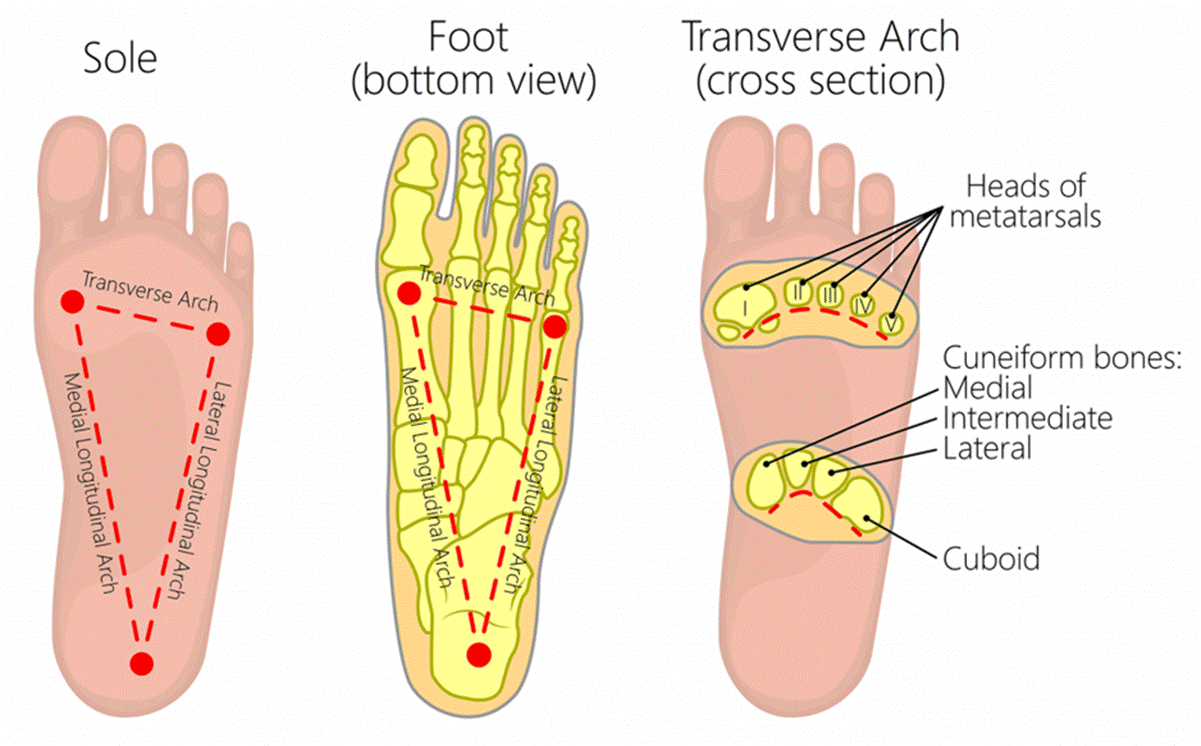
Anatomically, the foot arch system comprises the medial longitudinal arch, lateral longitudinal arch, and transverse arch. The medial longitudinal arch, being higher, is crucial for cushioning, stability, and rebound. The lateral longitudinal arch, closer to the ground, provides external support and balance. The transverse arch spans the midfoot and forefoot, distributing forefoot pressure and enabling the foot to adapt flexibly to various terrains. Crucially, these arches are not solely supported by bones; their integrity relies on the precise alignment of skeletal structures, the plantar fascia, spring ligament, short and long plantar ligaments, and the synergistic action of muscles and tendons such as the tibialis posterior and fibularis longus.
Tailored Solutions for Diverse Foot Types
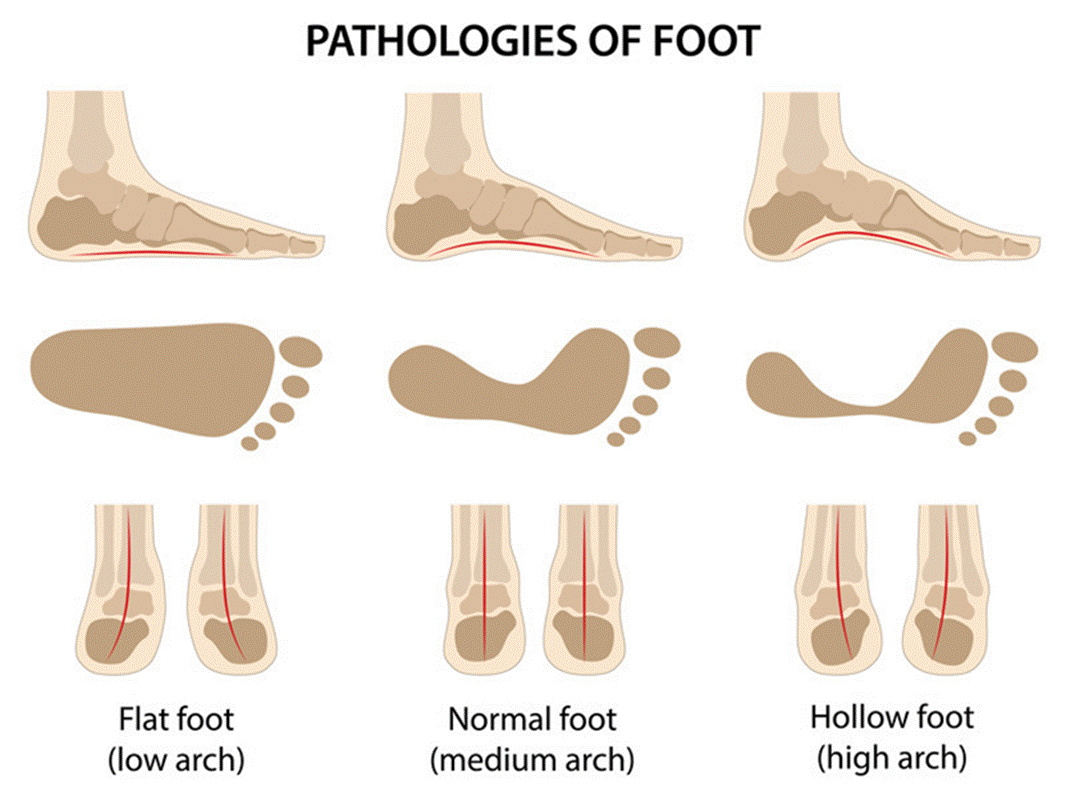
This anatomical complexity underscores why different foot types necessitate distinct footwear structures. Individuals with flat feet often experience insufficient medial arch support, excessive pronation, and fatigue during standing or walking. Conversely, those with high arches may suffer from reduced shock absorption, leading to concentrated pressure on the heel and forefoot. While conventional shoes typically employ a universal last and insole, the core value of functional footwear lies in translating these individual foot differences into manufacturable, wearable, and enduring structural designs.
The Functional Shoe Manufacturing Paradigm: Data-Driven Design
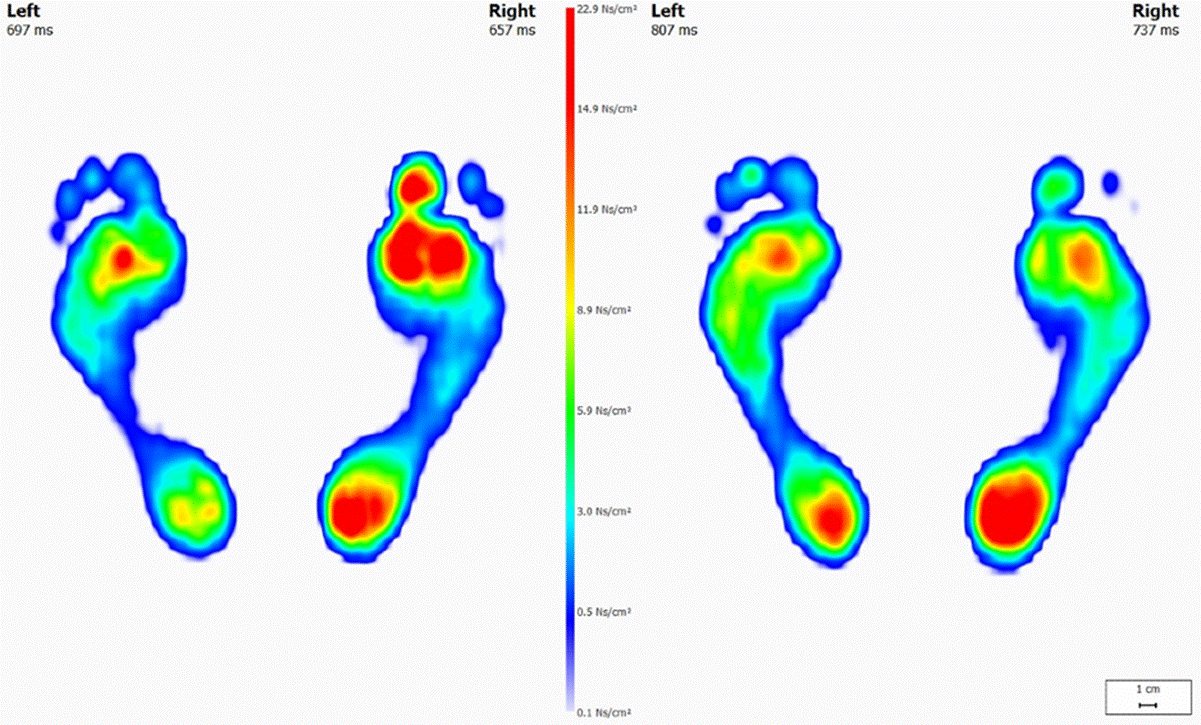
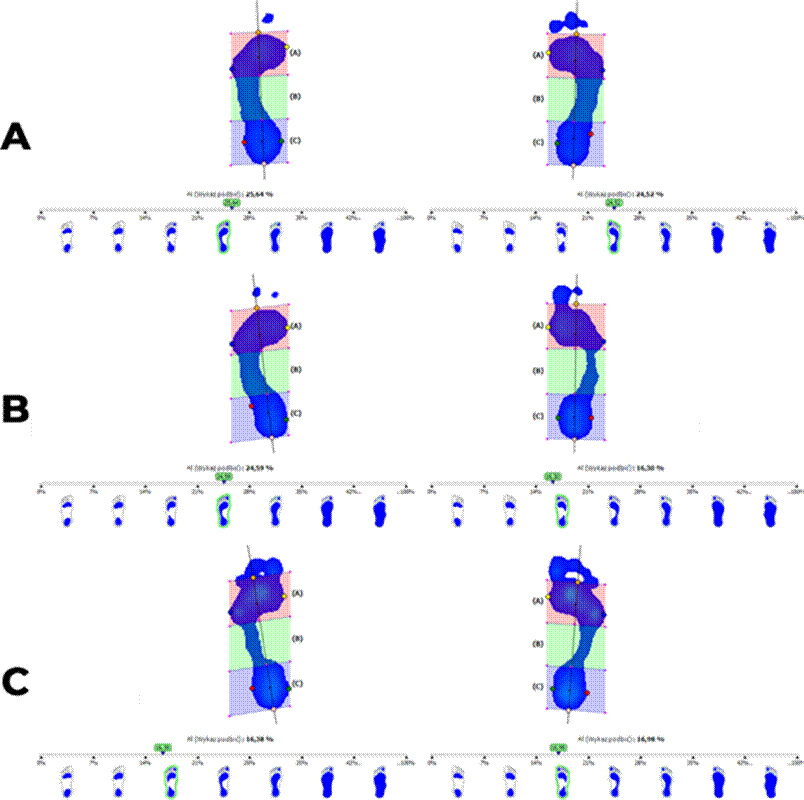
From a supply chain perspective, professional functional shoes commence with foot data, not aesthetic trends. The front-end process involves collecting comprehensive user data through foot type assessment, plantar pressure testing, gait observation, or 3D scanning. This data precisely identifies arch height, heel load, forefoot pressure, medial/lateral deviation, and gait stability. The mid-stream then translates these insights into specific design parameters for lasts, insoles, midsoles, outsoles, and heel stabilization structures. Finally, the back-end leverages advanced materials, molding techniques, forming processes, and stringent quality control to transform these ergonomic solutions into mass-producible products.
Advanced Insole and Outsole Systems
Functional shoe insole systems are engineered to address three critical aspects:
- Medial Arch Support: Providing appropriate support to the medial arch to mitigate collapse and reduce excessive strain.
- Targeted Cushioning: Implementing strategic cushioning in the heel and forefoot to absorb impact and alleviate localized pressure concentrations.
- Forefoot Pressure Distribution: Enhancing forefoot load distribution and improving comfort during prolonged standing and walking through transverse arch and metatarsal support.
It is vital to note that this "support" does not imply excessive rigidity; rather, it demands a delicate balance between stability, cushioning, and dynamic rebound.
For the outsole system, midsole materials must offer a combination of shock absorption, resilience, and anti-fatigue properties. Outsole patterns, conversely, are designed to optimize grip, turning capabilities, and gait propulsion. Functional shoes also adapt to diverse scenarios such as commuting, prolonged standing, healthcare, service industries, and light outdoor activities by adjusting heel-to-toe drop, flex points, heel cup depth, and arch support intensity. This ensures the footwear is not only comfortable upon initial wear but also consistently distributes pressure and stabilizes gait throughout a full day of real-world use.
The Systemic Competitiveness of Functional Footwear
From a supply chain perspective, the competitiveness of functional footwear transcends any single material or selling point. It resides in a systemic capability encompassing "Medical Logic + Engineering Design + Manufacturing Stability." This necessitates upstream material suppliers providing EVA, PU, TPU, memory foam, or composite support sheets with varying densities and rebound characteristics. It requires last and mold teams to possess a deep understanding of foot structure variations. Insole factories must be capable of executing zonal hardness, arch curvature, and pressure-release designs. Finally, finished product factories must maintain rigorous control over sizing, support height, flex points, and wearing consistency during mass production.
Truly effective functional shoes do not merely brand "arch support" as a marketing slogan. Instead, they translate ergonomic elements such as the arch, plantar fascia, tibialis posterior tendon, forefoot pressure, heel stability, and gait propulsion into tangible comfort, stability, and protection that consumers can genuinely experience. This demands an understanding of both the foot and the shoe, combining professional expertise with a mature supply chain to transform specialized knowledge into a marketable product.
Evolving Towards a Foot Support Solution Provider
Therefore, our strategic direction for functional footwear should evolve from "selling a pair of shoes" to "providing a comprehensive foot support solution." By grounding our approach in foot anatomy, leveraging advanced functional materials, and ensuring manufacturing capabilities through a robust supply chain, each pair of shoes can more scientifically support the arch, more evenly distribute pressure, and empower users to experience greater stability and ease in their daily walking, prolonged standing, and light athletic activities.


